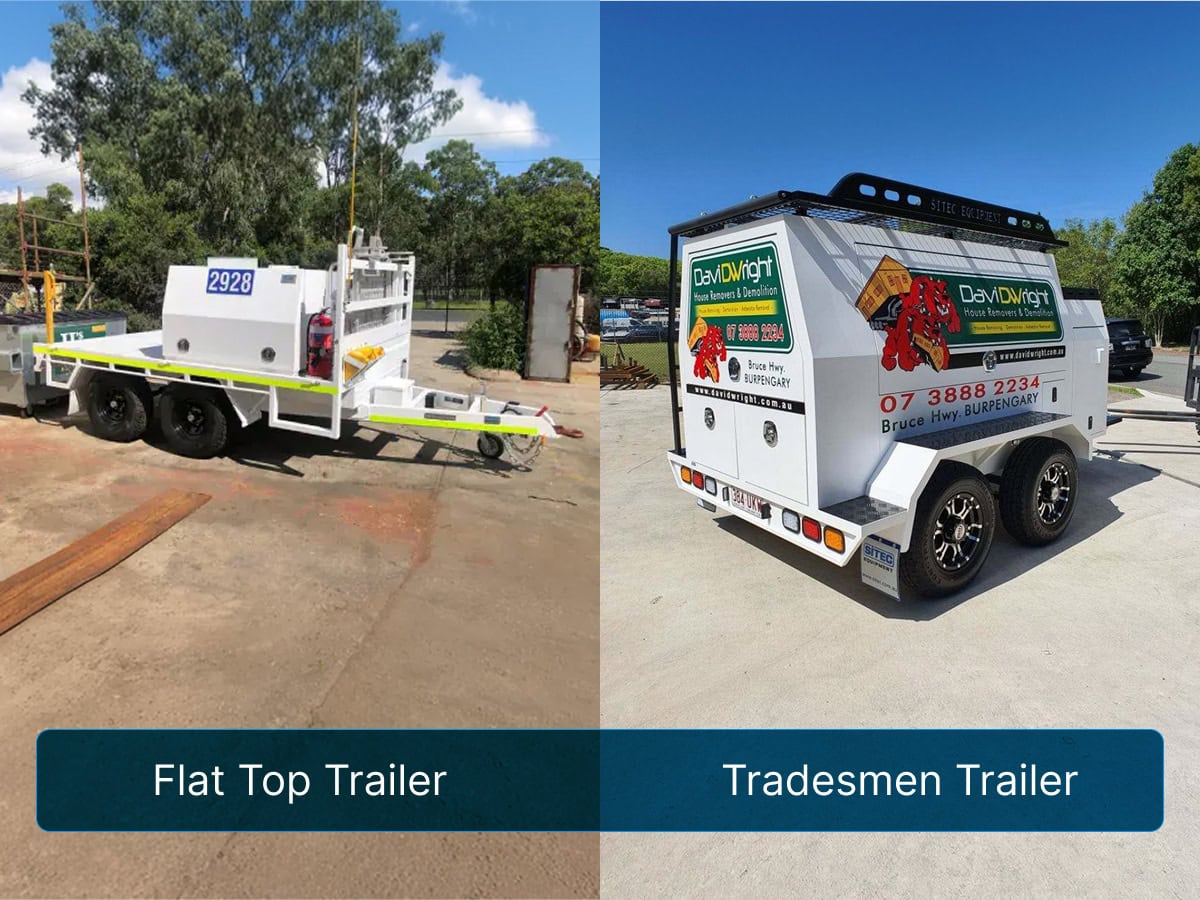
Flat Top Trailer vs Tradesman Trailer: Which One Works Harder for Your Business?
Choosing between a flat top trailer vs tradesman trailer isn’t just about which one looks tougher parked behind the ute.
It’s about the gear you’re carrying, how you work and how much time you’re prepared to spend wrestling equipment on and off the trailer.
For some tradies, a fully equipped tradesman trailer is the ultimate mobile workshop. Everything has its place, the tools are organised, and there’s a fighting chance you’ll find that 10mm socket before knock-off.
For others, a heavy-duty flat top trailer makes far more sense. Particularly when your working day involves moving machinery, materials, toolboxes and equipment that simply won’t fit inside an enclosed trailer.
At SITEC Equipment, we understand that a builder, mobile mechanic and civil contractor don’t necessarily need the same setup.
So, which trailer deserves a spot behind your ute?
Let’s sort it out.
SITEC Snapshot: Flat Top Trailer vs Tradesman Trailer
Short on time? Here’s the quick comparison before the boss wonders why you’re still on your phone.
Flat Top Trailer vs Tradesman Trailer Comparison
| Feature | Flat Top Trailer | Tradesman Trailer |
|---|---|---|
| Best Suited For | Machinery, equipment and materials | Tools, mobile workshops and service equipment |
| Loading Access | Open deck with flexible loading access | Doors and designated compartments |
| Tool Storage | Can incorporate dedicated toolboxes | Enclosed, organised tool storage |
| Oversized Loads | More flexibility for awkward equipment | Limited by compartment dimensions |
| Weather Protection | Requires suitable storage or load protection | Enclosed storage helps protect equipment |
| Customisation | Toolboxes, ramps, tanks and equipment fit-outs | Shelving, drawers, power systems and workstations |
| Common Applications | Civil works, mining, agriculture and equipment transport | Builders, electricians, plumbers and mobile mechanics |
The short answer?
If you’re regularly moving bulky equipment, machinery and materials, a SITEC Flat Top Trailer is worth a serious look.
If your priority is keeping tools secure, organised and ready to use throughout the day, a tradesman trailer could be the better option.
But before you hand over your hard-earned cash, there are a few things worth considering.
What Is a Flat Top Trailer?
A flat top trailer is built around an open deck, giving you greater flexibility to load, position and transport equipment.
Think of it as the trailer equivalent of a good workbench. Plenty of room to get the job done without everything getting in your way.
Rather than working around enclosed compartments, you can plan the layout around what you’re actually transporting.
That makes a flat top trailer particularly useful for carrying:
- Construction and civil equipment
- Machinery and maintenance equipment
- Toolboxes and worksite supplies
- Tanks and specialised equipment
- Agricultural machinery and materials
- Bulky or awkwardly shaped gear.
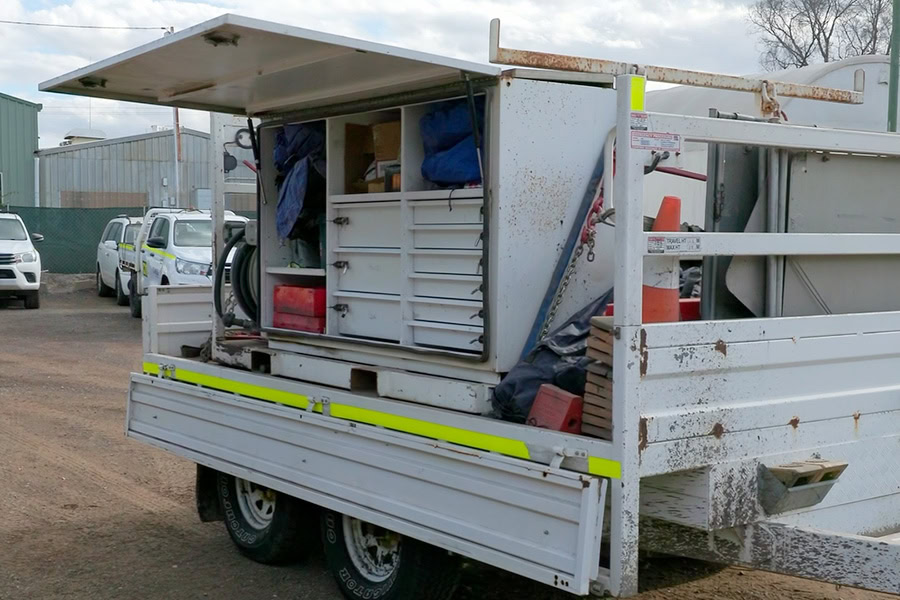
Where the SITEC Flat Top Trailer Fits In
The SITEC FB-01 Flat Top Trailer is designed for demanding commercial and industrial applications.
Its construction includes a heavy-duty 350-grade steel chassis, hot-dip galvanised finish and reinforced high-stress areas.
The open design also allows for custom configurations incorporating toolboxes, ramps, tanks and other equipment-specific requirements.
For civil contractors, mining operators and businesses moving equipment between worksites, that flexibility is a major consideration.
Because there’s not much point owning a trailer that looks the business if the gear you need won’t fit on it.
Explore the SITEC Flat Top Trailer range to see what’s available.
What Is a Tradesman Trailer?
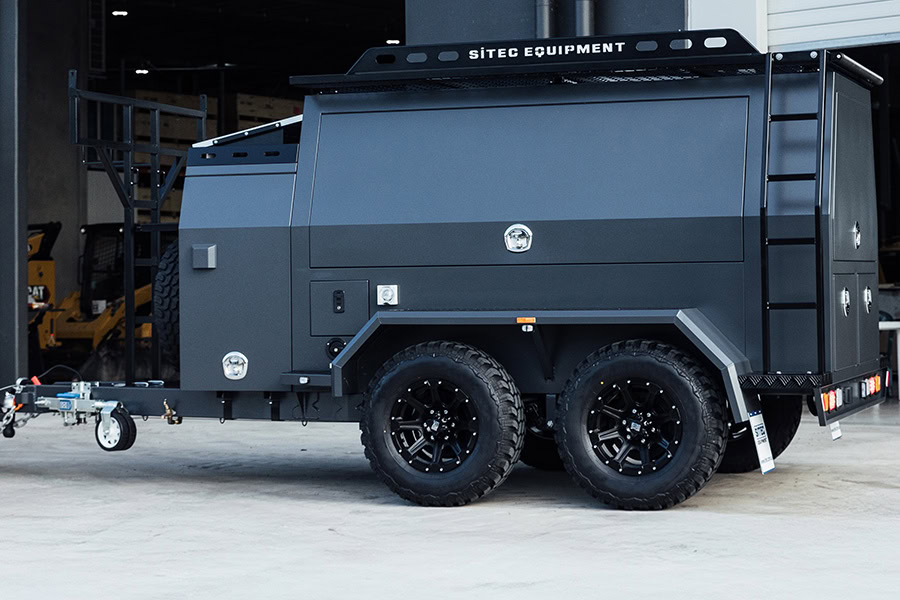
A tradesman trailer is generally designed to provide organised, enclosed storage for tools and equipment.
It’s a popular option for tradies who work across multiple locations and need their gear accessible throughout the day.
Rather than unpacking half the ute every time you need something, a properly configured tradesman trailer can keep your tools, equipment and workstations organised.
SITEC offers custom tradesman trailers designed around different trades and mobile service requirements.
The range includes:
Depending on the configuration, these trailers can incorporate shelving, workstations, storage systems and electrical equipment.
For mobile mechanics, electricians and other service technicians, that can make the working day considerably more organised.
And let’s face it, nobody enjoys digging through a mountain of tools while the apprentice stands there asking if you’ve found it yet.
Five Differences Between Flat Top and Tradesman Trailers That Actually Matter
1. Loading Equipment Without the Usual Carry-On
One of the biggest advantages of a flat top trailer is its open layout.
Depending on the configuration, equipment can be accessed and loaded from different directions using appropriate loading equipment.
That’s particularly useful when you’re moving machinery, tanks or bulky materials that aren’t exactly designed to squeeze through a trailer door.
A tradesman trailer works differently.
Its enclosed compartments are designed around organised access to tools and equipment rather than transporting large, changing loads.
Our take: If you’re regularly transporting bulky equipment, a flat top trailer could save you a fair bit of mucking around.
2. Tool Storage and Security
This is where tradesman trailers earn their keep.
Enclosed compartments make it easier to organise, store and secure your tools between jobs.
But choosing a flat top trailer doesn’t mean throwing your expensive equipment onto an open deck and hoping nobody develops sticky fingers.
SITEC Flat Top Trailers can incorporate additional storage solutions, including toolboxes.
That means you can explore a configuration combining an open deck with dedicated storage for smaller equipment.
For example, a civil contractor might need room for machinery while keeping hand tools, fittings and essential equipment secured separately.
SITEC also offers a range of heavy-duty toolboxes and toolbox combinations worth exploring when planning your setup.
Our take: Think about what needs to be locked away and what needs to be easily loaded before choosing your trailer layout.
3. Flexibility When Every Job Is Different
Some tradies carry the same gear every day.
Others have a completely different load depending on which job they’re heading to.
Monday might involve moving machinery. Tuesday could mean transporting materials. By Friday, you’re loading something completely different and wondering where the week disappeared.
For businesses handling varied loads, the flexibility of a flat top trailer can be a major advantage.
The open deck allows operators to plan different equipment arrangements, provided the loads remain within the approved trailer specifications and are properly restrained.
Tradesman trailers generally work best when your equipment requirements stay relatively consistent.
Our take: If the equipment changes more often than the weather forecast, it’s worth looking at a flat top trailer.
4. Towing Capacity and Payload
Here’s where we get a little technical.
Don’t worry, there won’t be a maths exam at the end.
Before choosing either trailer, you need to know how much weight you’re planning to transport.
The things to keep in mind are…
- ATM: Aggregate Trailer Mass, the maximum permitted total mass of the loaded trailer, including the mass supported by the towing vehicle through the coupling.
- Tare Weight: The weight of the trailer before adding its load, based on the specified configuration.
- Payload: The weight available for the gear you’re moving day-to-day.
The SITEC FB-01 Flat Top Trailer has a published ATM rating of 3.5 tonnes.
However, the actual payload available depends on the trailer’s final configuration, accessories and fitted equipment.
Adding toolboxes, tanks, ramps and other modifications affects the trailer’s weight.
You also need to consider the towing vehicle’s permitted capacities, towball loading and relevant legal requirements.
The Queensland Government’s towing guidelines provide useful information about towing vehicle requirements and weight limits.
The National Transport Commission’s Load Restraint Guide also explains important considerations for safely securing equipment during transport.
Our take: Work out what you’re carrying before buying the trailer. Finding out afterwards that your load is too heavy is a conversation nobody wants to have.
5. Customisation for the Way You Actually Work
No two businesses operate exactly the same way.
A mobile mechanic might need dedicated tool storage, power systems and a practical workstation.
A civil contractor could require an open loading platform with additional storage and equipment-specific fittings.
A fleet manager might need several trailers configured around different operational requirements.
That’s where discussing your setup with the manufacturer becomes important.
SITEC offers customisation options across its trailer range, allowing customers to discuss the equipment, storage and access requirements of their business.
For flat top trailers, that can include toolboxes, ramps, tanks and other custom fit-outs, subject to the intended application and engineering requirements.
Rather than buying a trailer and then working out how to make everything fit, you can start by discussing what the trailer actually needs to do.
Our take: Build your trailer requirements around the job, not around whatever looks flash in the catalogue.
Which Trailer Suits Your Trade?
Builders and Construction Contractors
Builders often need a mixture of tools, materials and equipment.
If most of your gear consists of power tools, hand tools and smaller equipment, a tradesman trailer with organised storage could be a practical choice.
But if you’re regularly shifting bulky materials or equipment between sites, a flat top trailer may provide greater flexibility.
For builders doing a bit of everything, comparing both configurations is worth the effort.
Mobile Mechanics and Service Technicians
A tradesman trailer can be an excellent mobile workshop.
Dedicated storage, workstations and power systems help keep essential equipment accessible throughout the day.
However, businesses transporting additional machinery or specialised equipment may also benefit from exploring a flat top configuration with dedicated storage.
The decision depends on the equipment you’re carrying and how you use it.
Civil Contractors and Mining Operators
For civil construction and mining operations, equipment access, load requirements and durability are often the big considerations.
Operators may need to transport machinery, tanks, toolboxes, spare parts and specialised worksite equipment.
The SITEC Flat Top Trailer is designed with these demanding applications in mind.
Its heavy-duty construction and open layout provide a practical starting point for businesses assessing their transport requirements.
And when you’re working a fair distance from the nearest workshop, having equipment that suits the job becomes even more important.
Fleet Managers and Procurement Officers
Buying trailers for an entire team involves more than finding the cheapest option.
You need to consider what each trailer will carry, how operators will access equipment and whether the configuration suits the work being performed.
A tradesman trailer might be ideal for a mobile maintenance crew.
A flat top trailer may be more suitable for transporting equipment between construction sites.
For businesses managing multiple crews, selecting the right configuration for each application can help avoid unnecessary compromises.
Because explaining why the brand-new trailer can’t carry the equipment it was purchased for is probably not the highlight of anyone’s Monday morning meeting.
Can You Have the Best of Both Worlds?
Here’s something worth considering.
A flat top trailer doesn’t have to be nothing more than an open deck.
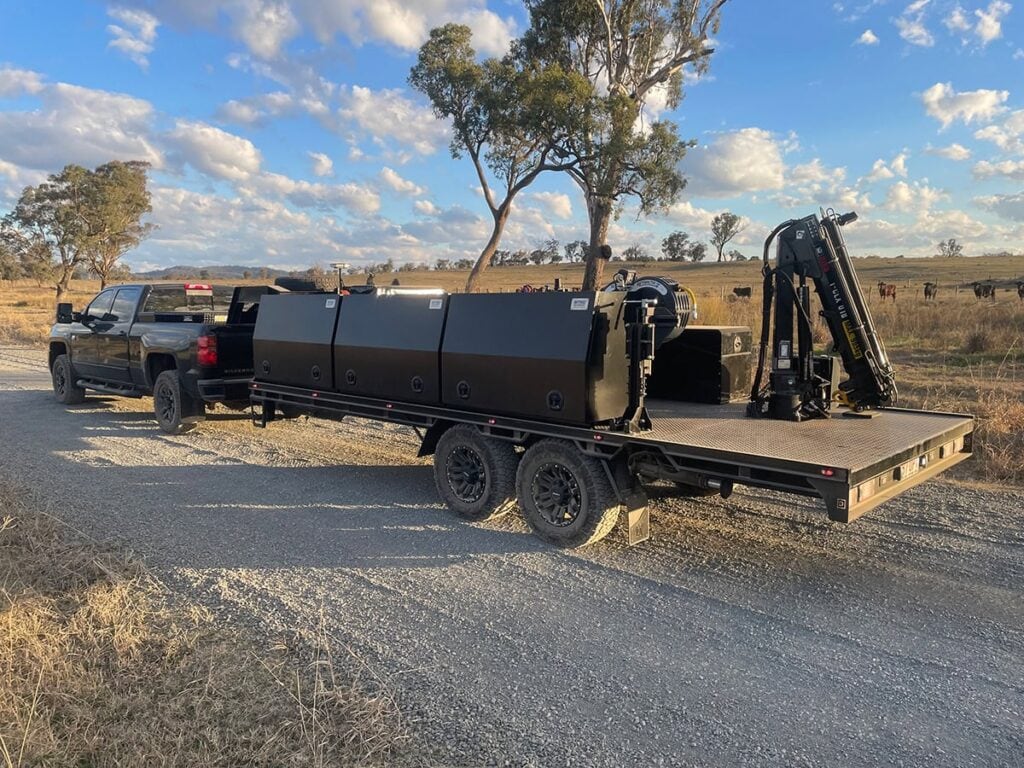
SITEC’s flat top design allows businesses to explore configurations incorporating toolboxes and other equipment-specific additions.
That creates opportunities for customers who need an open loading platform but still want dedicated storage for essential tools and supplies.
Of course, every addition needs to be considered against the trailer’s weight ratings, available space and engineering requirements.
But it does mean you’re not necessarily limited to choosing between storage and flexibility.
If you’re considering a combination of open deck space and secure storage, speak with SITEC about the available Flat Top Trailer configurations.
Flat Top Trailer vs Tradesman Trailer: Which Should You Buy?
There’s no single trailer that’s perfect for every trade.
And there shouldn’t be.
Choose a Tradesman Trailer If:
- You need organised, enclosed tool storage.
- Your business operates as a mobile workshop.
- You regularly access smaller tools and equipment.
- Your equipment requirements remain relatively consistent.
- You want dedicated storage compartments and workstation options.
Consider a Flat Top Trailer If:
- You regularly transport bulky machinery or materials.
- You need flexible loading access.
- Your business handles different types of equipment.
- You want to combine an open deck with dedicated toolbox storage.
- You work in civil construction, mining, agriculture or equipment-intensive industries.
- You need to discuss a custom configuration for specialised equipment.
For some businesses, both trailer styles may have a place in the fleet.
The important thing is choosing equipment that makes your job easier rather than creating another problem every time you need to load it.
Frequently Asked Questions About Flat Top and Tradesman Trailers
Is a flat top trailer the go-to, or the tradesman trailer?
It depends on what you’re moving. Flat top trailers offer greater flexibility for bulky equipment and changing loads, while tradesman trailers are generally better suited to organised tool storage and mobile workshop applications.
Can you put toolboxes on a flat top trailer?
Yes of course. SITEC’s flat top trailer can be configured with toolboxes and other storage options. The final arrangement needs to account for trailer weight ratings, load distribution and the intended application.
Are flat top trailers better for builders?
Flat top trailers can be a practical option for builders who regularly transport materials, machinery and bulky equipment. Builders who primarily need enclosed tool storage may prefer a tradesman trailer.
What size flat top trailer do I need?
Depends on what you’re carting around! You’ll need enough room for your gear without overloading the trailer or pushing your ute past its towing limits. Think about what you’re hauling, how heavy it is and how you’re getting it on and off.
Can I get a 3.5T flat top trailer from SITEC?
SITEC lists its FB-01 Flat Top Trailer with a 3.5-tonne ATM rating. Speak with the team about the available payload and whether the configuration suits your equipment and towing requirements.
Can a flat top trailer be customised for civil construction or mining?
SITEC offers custom fit-out options for its flat top trailers, including toolboxes, ramps, tanks and other equipment-specific additions. Discuss your requirements with the team to determine what is practical for your intended application.
Does SITEC offer trailer finance?
Yes. SITEC provides information about commercial equipment financing through its finance partner. Visit the SITEC Finance page to explore the available options.
Find the Right Trailer for Your Business with SITEC
A good trailer should make your working day easier.
Not leave you scratching your head in the driveway wondering how you’re going to fit everything on it.
If you’re comparing a flat top trailer vs tradesman trailer, the SITEC team can help you explore the available configurations and work out what suits your business.
From mobile workshops to heavy-duty equipment transport, the starting point is understanding what you’re carrying, where you’re working and how you need to access your gear.
Looking for a flat top trailer that works as hard as you do?
Explore SITEC Flat Top Trailers or contact the SITEC team to discuss your equipment requirements.
You can also find SITEC Equipment on Google to view the business profile, get directions and explore customer feedback.
Bring us the job requirements. We’ll help you work out the trailer.