
Every tradie knows the feeling. You buy something that looks perfect in the showroom. Then you get it onto the job site and discover the toolbox blocks access, the equipment doesn’t fit properly and the gear you use most is buried behind everything else. Suddenly, that bargain doesn’t look quite so clever.
Custom flat top trailers give tradies, civil contractors and mobile service operators the opportunity to plan their transport setup around the equipment they actually use. From toolbox placement and equipment access to trailer dimensions and carrying capacity, getting the configuration right can make a difference to how you work.
And when your trailer is part of your working day, that planning matters.
Sitec Snapshot: Custom flat top trailers
Short on time? Jump straight to what matters for your next work trailer.
- Why consider custom flat top trailers?
- Toolbox storage and trailer configurations
- Flat top trailers for builders and carpenters
- Flat top trailers for mobile mechanics
- Flat top trailers for civil contractors
- Mining and field service trailer requirements
- Equipment access and weight distribution
- What to consider before ordering
- Frequently asked questions
Why Choose Custom Flat Top Trailers?
Standard trailers can be suitable for plenty of commercial applications.
But not every tradie carries the same gear, works on the same sites or needs access to equipment in the same way.
A mobile mechanic might need organised tool storage and space for service equipment.
A civil contractor might need to transport machinery, materials and equipment between worksites.
A builder might need an open deck for materials, with separate storage for smaller tools.
That’s where planning a custom flat top trailer configuration becomes useful.
Depending on the trailer and available options, the planning process may include:
- Trailer deck dimensions
- Toolbox placement and storage requirements
- Equipment mounting provisions
- Loading and unloading access
- Trailer payload and weight distribution
- Positioning of tanks and other fitted equipment
- Future equipment and storage requirements
The goal is simple.
Make the trailer work around the job, rather than making the job work around the trailer.
Explore the Sitec Flat Top Trailers range to learn more about available trailer options.
Planning Toolbox Storage on Custom Flat Top Trailers
There’s nothing quite like needing one particular tool and discovering it’s buried behind everything else you’ve loaded.
When planning toolbox storage for a flat top trailer, think about more than how much equipment you can squeeze into the available space.
Think about how you’ll actually use it.
Keep Frequently Used Equipment Accessible
The tools you reach for every day should be easy to access without unloading half the trailer.
Consider which equipment needs regular access and where storage compartments would be most practical.
Consider Toolbox Placement
Toolboxes need to be positioned with loading space, equipment access and weight distribution in mind.
A toolbox that looks perfectly positioned on paper might create problems if it interferes with loading or accessing other equipment.
Allow for Equipment Changes
Your business might not be carrying the same equipment in two years.
If you’re planning to add machinery, storage or specialised tools, discuss those requirements before finalising the trailer configuration.
Sitec also offers a range of toolboxes worth exploring when planning your equipment storage requirements.
Flat Top Trailers for Builders and Carpenters
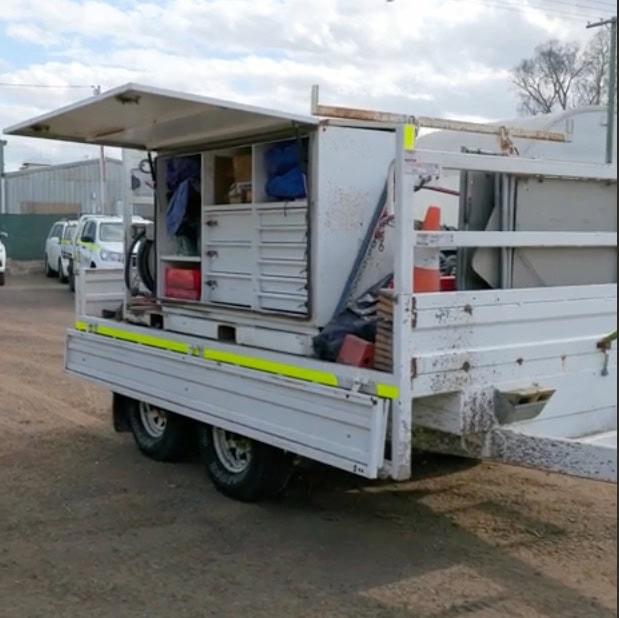
Builders and carpenters often need to transport a mix of tools, materials and equipment.
One day you’re carrying toolboxes and the next you hauling machinery equipment, attempting to fit everything on without turning the trailer into a game of Tetris.
An open flat top trailer platform can provide flexibility for equipment and materials that don’t suit enclosed storage.
However, tool storage is still a priority.
A combination of open carrying space and appropriately positioned toolboxes may help separate smaller tools from larger materials.
What Should Builders Consider?
- The dimensions of materials regularly transported
- Space required for tools and equipment
- Loading and unloading access
- Toolbox placement
- Load restraint requirements
- The trailer’s available payload
Before choosing a trailer, consider the equipment you carry most frequently and how easily it can be loaded, secured and accessed.
Custom Flat Top Trailers for Mobile Mechanics
For mobile mechanics and service technicians, equipment organisation can be just as important as carrying capacity.
A poorly arranged trailer can mean unnecessary time spent searching for tools or moving equipment between jobs.
And when you’re working on-site, the last thing you need is a trailer that makes every job harder.
When planning a mobile service trailer think about the following…
- Toolboxes and equipment storage
- Generators and compressors
- Fuel or water tanks
- Service equipment
- Spare parts and consumables
- Equipment requiring specialised mounting provisions
Some equipment may require additional structural, electrical or mounting considerations.
The suitability of these additions needs to be assessed as part of the proposed trailer build.
Start by thinking about your normal working day.
What equipment do you use most? What needs to remain accessible? What takes up the most room?
Those answers provide a useful starting point when discussing your trailer requirements with Sitec.
Flat Top Trailers for Civil Contractors
Civil contractors may need to transport machinery, site materials, fuel cells and specialised equipment.
That makes load capacity, structural design and equipment access important considerations.
Sitec’s FB-01 Flat Top Trailer features a heavy-duty 350 grade steel chassis, reinforced high-stress areas and a hot dip galvanised finish.
Its open structural design is intended to help reduce the accumulation of dirt, mud and debris.
For businesses operating across demanding worksites, these are practical features worth investigating when comparing commercial trailers.
Planning a Civil Contractor Trailer
Before settling on final custom build, consider ythe following…
- The weight and dimensions of machinery being transported
- How equipment will be loaded and unloaded
- Required load restraint arrangements
- Storage for tools and smaller equipment
- Whether tanks or other equipment will be permanently installed
- The towing vehicle and complete combination limits
It’s worth discussing your heaviest anticipated load rather than planning around the equipment you carry on an average day.
Custom Flat Top Trailers for Mining and Field Service
Mining and field service operations can involve specialised equipment and challenging operating environments.
A trailer custom-build may need to account for toolboxes, equipment mounts, tanks and other worksite requirements.
Sitec’s FB-01 is marketed for mining, drill rig support, civil works and other demanding commercial applications.
For procurement officers and fleet managers, trailer preferences should begin with the intended operating requirements.
Questions Worth Asking Before Placing Your Order Online
- What equipment will the trailer transport?
- What is the maximum expected working load?
- Will specialised equipment need mounting provisions?
- Are additional toolboxes or tanks required?
- What towing vehicles will be used?
- Are there site-specific operating requirements?
- Will the trailer need to accommodate future equipment changes?
Rather than assuming a standard setup will suit every operation, discuss the intended loads and site conditions before choosing a flat-top trailer build.
Don’t Forget Equipment Access and Weight Distribution
A good trailer layout isn’t just about fitting everything onto the deck.
You need to consider how equipment is loaded, secured, accessed and transported.
Toolboxes, tanks, ramps and other accessories contribute to the trailer’s overall weight.
That weight affects the payload remaining for equipment and materials.
It can also influence load distribution and the suitability of the completed trailer configuration.
Understanding Trailer Payload for Custom flat top trailers
Aggregate Trailer Mass (ATM) is the maximum permitted total mass of the loaded trailer when it is not supported by the towing vehicle.
The trailer’s tare weight forms part of that total.
For example, a trailer with a 3,500 kg ATM and a 1,200 kg tare weight has a calculated payload of approximately 2,300 kg before additional accessories and modifications.
The actual permitted loading arrangement must also account for other applicable limits, including Gross Trailer Mass (GTM), axle ratings and the towing vehicle.
For a more detailed explanation, read our guide to 3.5T vs 4.5T Flat Top Trailers.
Before finalising a custom trailer configuration, check that the proposed equipment and layout suit the trailer’s rated capacity and the towing vehicle.
Start With Your Equipment List Before Ordering a Custom Flat Top Trailer
If you’re considering a custom flat top trailer, start by making a list of everything you need it to carry.
Include the dimensions and weights of your equipment, along with any storage or mounting requirements.
Think about which items need regular access and which are only used occasionally.
And don’t forget the equipment you might need in the future.
What Information Should You Have Ready?
- Your towing vehicle make and model
- The equipment you intend to transport
- Equipment dimensions and weights
- Preferred trailer dimensions
- Toolbox and storage requirements
- Any proposed tanks or equipment mounts
- Loading and unloading requirements
- Expected future equipment changes
If you’ve already got a work trailer, consider what frustrates you about the current setup.
Maybe the toolbox is in the wrong spot.
Maybe you’re constantly moving equipment around just to get to something else.
Or perhaps you’ve simply outgrown the trailer you started with.
That’s often a pretty good place to start when planning the next one. See what our clients say on Google.
Frequently Asked Questions About Custom Flat Top Trailers
Can I customise a flat top trailer with toolboxes?
Toolbox integration may be considered when planning a flat top trailer configuration. The suitability of a particular arrangement depends on available options, toolbox dimensions, weight distribution and the intended equipment load. Discuss your requirements with Sitec before ordering.
What size flat top trailer do I need for my business?
The right trailer dimensions depend on the equipment and materials you need to transport. Consider the length, width, height and weight of your largest regular loads, along with loading access and storage requirements.
Can a flat top trailer be configured for mobile service work?
A flat top trailer may be suitable for mobile service applications, depending on the required equipment, storage and mounting arrangements. Discuss your intended setup with Sitec to determine which available configurations may be appropriate.
Can I add a crane to the rear of a flat top trailer?
A rear-mounted crane requires careful consideration of structural capacity, weight distribution, stability and the loads transferred into the trailer. Any proposed crane installation needs to be assessed for suitability before a trailer configuration is confirmed. Speak with Sitec about your intended crane and lifting requirements.
Do custom toolboxes reduce trailer payload?
Yes. Toolboxes and other permanently fitted accessories contribute to the trailer’s overall weight. This reduces the remaining capacity available for equipment and materials.
Can Sitec help plan a flat top trailer for a commercial fleet?
Sitec can discuss intended applications, equipment requirements, trailer dimensions and available configuration options. Fleet managers should also consider towing vehicle compatibility and any operational requirements across their vehicles.
Build a CUSTOM Flat Top Trailer That Suits Your Work
Your trailer shouldn’t be the thing slowing down your working day.
From builders and mobile mechanics to civil contractors and field service operators, different businesses need different equipment arrangements.
Sitec offers heavy-duty flat top trailers with customisation options for commercial and industrial applications.
From toolbox integration to trailer dimensions and equipment configurations, the team can discuss your intended setup.
Looking for custom flat top trailers for your business?
Tell Sitec what you need to carry, what you’re towing it with and how you want your trailer to work.
Explore Sitec Flat Top Trailers and Discuss Your Requirements